|
The quotations, short texts, and
photographs in this work remain the exclusive property of
their respective authors.
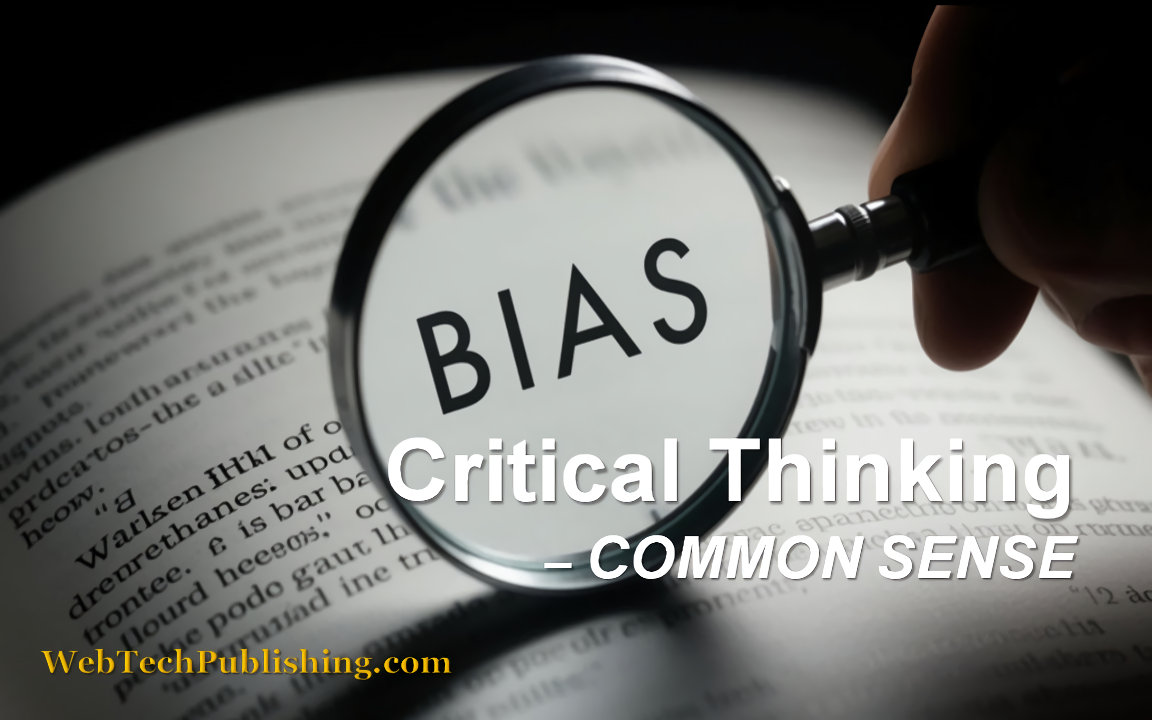
CRITICAL THINKING: The art of not swallowing
everything that sparkles!
In a world where information travels faster than a spilled
coffee across a keyboard, critical thinking is our mental
shield. It keeps us from believing that everything
well-presented must be true, because no, a 3D graph doesn’t
make nonsense more credible. It’s what helps us sort facts
from opinions and spot those messages that reek a little too
much of emotional marketing.
Cultivating this skill is like working out your brain without
breaking a sweat (although… sometimes it gets hot). It means
learning to say, « hmm... interesting » instead of « wow, that
must be true » when reading something online. You have to
learn to spot biases, resist seductive phrasing, and build
solid opinions, even without rhetorical corsets to hold them
up.
In the workplace, critical thinking is a discreet superpower:
it helps solve problems without creating new dramas,
collaborate without throwing pens, and make ethical decisions
without needing a council of sages. But in an age when
messages are shorter than express delivery times, thinking has
become almost an act of resistance.
Fostering independent thought is like gardening your mind: you
need to weed out ready-made ideas, water constructive doubts,
and let nuanced reflections grow. It means moving beyond
knee-jerk reactions (even when they’re tempting),
understanding others without rushing to judgment, and
remembering that our choices have an impact, even if it’s not
written in bold.
To sharpen our critical mind, we also
need to tame our limiting thoughts. Those little inner voices
that whisper « You’re not
smart enough for this » or «
everyone thinks that, so it
must be true. » Surprise: they
lie. But with a bit of curiosity and a lot of
self-questioning, we can turn them into fuel for better
thinking.
Developing a sharp critical mind means refusing to be seduced
by slickly packaged messages. It’s knowing that behind a
logical façade may lurk subtle manipulation, like those ads
selling bottled happiness. We need to learn to keep emotional
distance, not to become cold as a freezer, but to better grasp
what’s at stake without being swept away by the first catchy
slogan.
The lack of critical thinking often stems from education that
values right answers over good questions, from heavy social
media use (where reflection lasts about 0.3 seconds), or
simply from the cozy comfort of thinking like everyone else.
But that comfort comes at a cost: the loss of genuine inquiry
into the world.
So yes, critical thinking is demanding. It takes time,
dialogue, a bit of reflection… and superhuman mental strength
not to derail the conversation with that sketchy viral image
your hamster would’ve scrolled past without blinking.
But it’s also one of the pillars of free, enlightened, and
responsible citizenship. And in a world where intellect is
constantly tested, it remains our best ally to avoid mistaking
virality for truth.
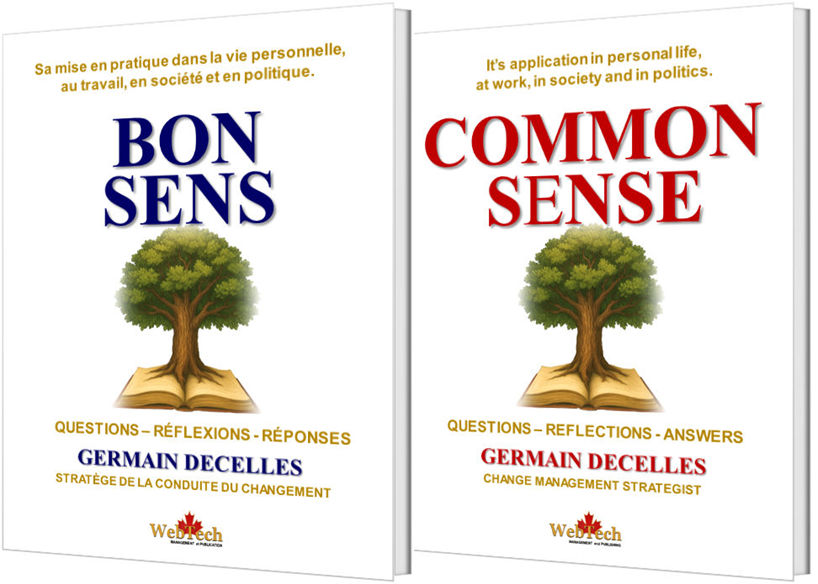
COMMON SENSE
offers a modern framework for anyone who wants to think
clearly, act wisely, and move forward with intention. If
you’re ready for clarity in a chaotic world, explore
COMMON SENSE
at webtechpublishing.com.
At WebTech Publishing, we created COMMON SENSE because it
offers a concrete, solid, and deeply practical framework for
regaining direction and rebuilding life with intention. For
anyone who feels they’ve drifted, or that the world has become
too chaotic to navigate, this book serves as a true compass.
To reconnect with clarity in a world that
never stops accelerating, simply explore COMMON SENSE at wwebtechpublishing.com.
Available at:
To download this and
previous articles, go to WebTech Publishing (www.webtechpublishing.com
and click on the green image (e-NewsLine).
To learn more about
how to inspire success, visit WebTech Management and
Publishing Incorporated (www.webtechmanagement.com)
and click on the blue image (Wise whiZ) at the bottom right of
the screen.
—30 —
|