|
The quotations, short texts, and
photographs in this work remain the exclusive property of
their respective authors.
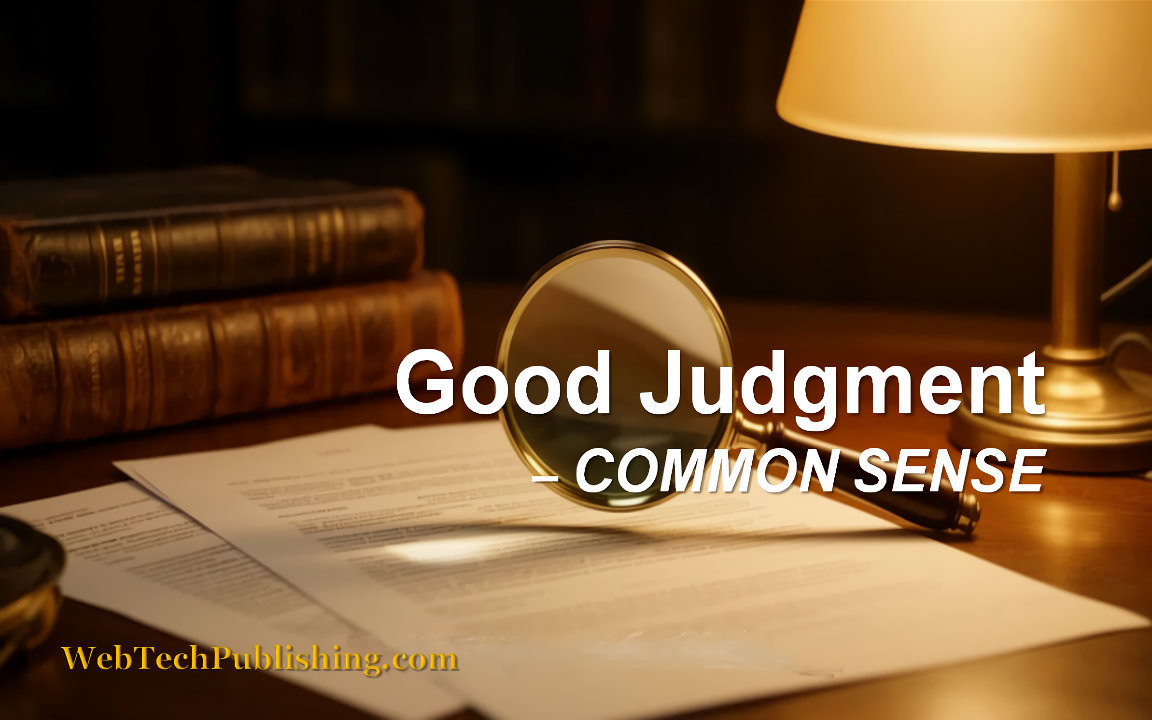
GOOD JUDGMENT: Or the art of not firing off your opinion too
quickly!
Good judgment isn’t just about having a well-oiled brain. It’s
a kind of practical wisdom, a subtle cocktail of experience,
reflection, and empathy, shaken, not stirred. It’s the ability
to assess a situation, a behavior, or a person with finesse,
nuance, and fairness… without turning into a reality TV judge.
You can spot the masters of discernment by their superpower:
thinking before acting (yes, it exists), listening before
jumping to conclusions, and wielding tact like a grandmother
seasoning her soup, just enough, never too much.
No mental shortcuts, no prefab
stereotypes, and definitely no «
emotional fast food
» judgments. These people prefer understanding over
condemning, and reflection overreacting like a fire alarm.
Having discernment also means knowing how
to say to your first impressions:
«
Thanks, but I’ll double-check.
» It’s adopting a posture that’s open, clear-eyed, and capable
of juggling emotions, personal histories, and the blind spots
of reality. In short, it’s being a bit like Sherlock Holmes,
with more empathy and less pipe.
True discernment doesn’t stop at what’s obvious. It listens to
silences, decodes the unsaid, and spots the truths hidden
behind appearances, like a detective who’s read too many
philosophy novels.
But beware: this kind of judgment doesn’t
download in 5G. It takes time, rigor, and a healthy dose of
self-questioning. It’s built through active listening,
spirited yet respectful debate, and intensive training in
emotional intelligence, that ability to distinguish «
I feel
» from «
I know.
»
By contrast, those who judge faster than their own shadow
often do so to reassure themselves, to compare, or to protect.
The result?
A barrage of criticism, opinions set in reinforced concrete,
curiosity on sabbatical, and empathy gone missing.
But all is not lost! By cultivating
kindness, learning to question ourselves without
self-flagellation, and realizing that snap judgments cause
more damage than a poorly worded «
tweet,
» we can move toward a posture that’s fairer, more humane… and
frankly, classier.
Finally, judging someone’s character
isn’t about sticking them in a box labeled «
fragile
» or «
under surveillance.
» It’s about observing patiently, seeking coherence between
their words, actions, and values, like a food critic who
tastes before scoring.
An enlightened judgment is like a good
flashlight: it doesn’t just light up the surface; it seeks the
substance. And it avoids confusing «
what we see
» with, «
what truly is.
»
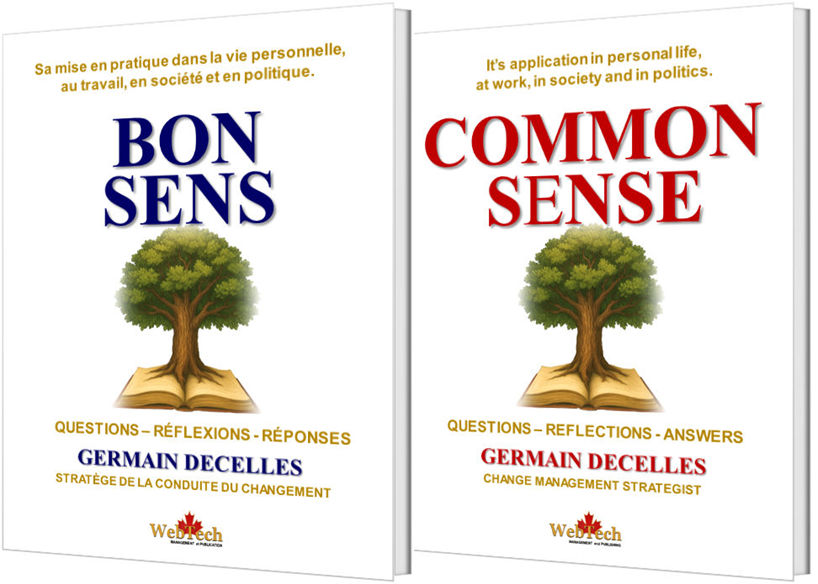
COMMON SENSE
offers a modern framework for anyone who wants to think
clearly, act wisely, and move forward with intention. If
you’re ready for clarity in a chaotic world, explore
COMMON SENSE
at webtechpublishing.com.
At WebTech Publishing, we created
COMMON SENSE
because it offers a concrete, solid, and
deeply practical framework for regaining direction and
rebuilding life with intention. For anyone who feels they’ve
drifted, or that the world has become too chaotic to navigate,
this book serves as a true compass.
To reconnect with clarity in a world that
never stops accelerating, simply explore
COMMON SENSE
at
webtechpublishing.com.
Available at:
To download this and
previous articles, go to WebTech Publishing (www.webtechpublishing.com
and click on the green image (e-NewsLine).
To learn more about
how to inspire success, visit WebTech Management and
Publishing Incorporated (www.webtechmanagement.com)
and click on the blue image (Wise whiZ) at the bottom right of
the screen.
—30 —
|