|
|
Articles |
 |

Ateliers, Conférences & Causeries
|
|
Acheter de l'imprimeur |
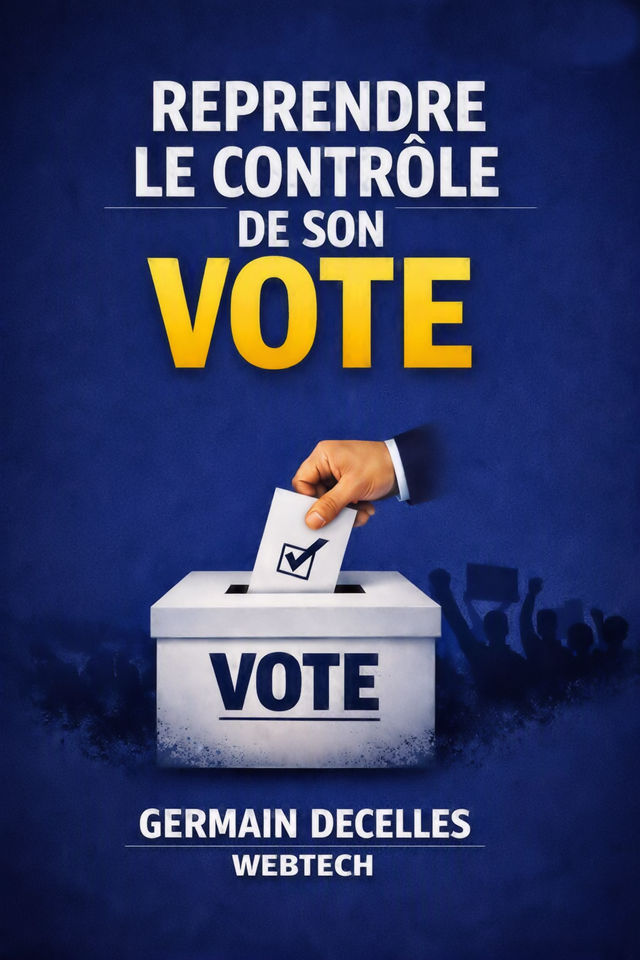 |
ISBN 978-1-0693132-5-6 |
|
| Livre de poche,
490 Pages |
| Prix: $45.98
us - $70.02 cdn - 40.05 Euro - $68.67 AUD - 35.23 GBP |
|
Expédié dans
les 8 à 14 jours.
|
|
|
|
Buy from the printer |
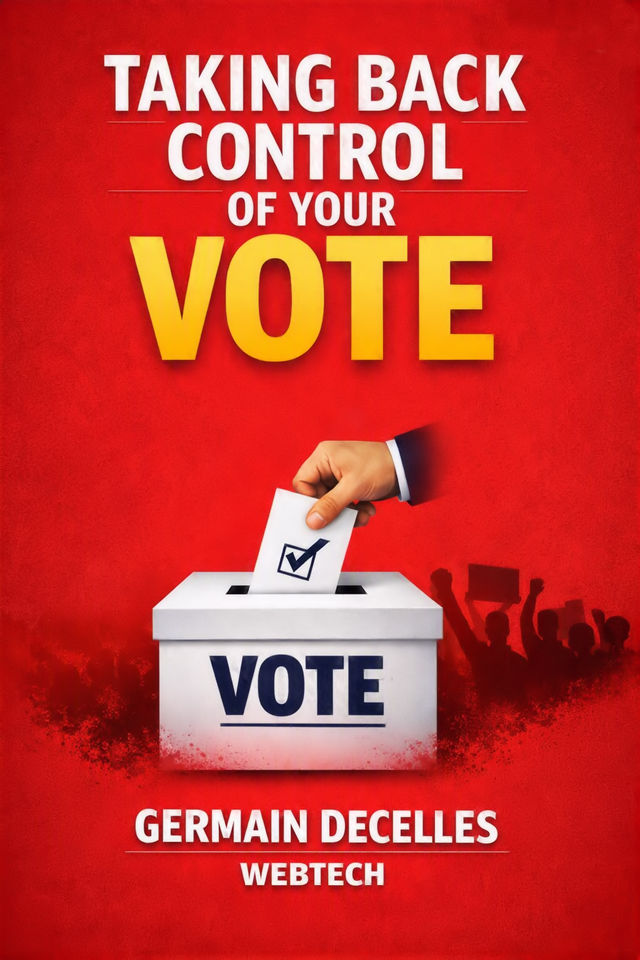 |
ISBN 978-1-0693132-7-0 |
|
|
Paperback:
490 Pages |
| Price: $45.98
us - $70.02 cdn - 40.05 Euro - $68.67 AUD - 35.23 GBP |
|
Shipped within
8 to 14 days.
|
| |
|
|
| |
| |
| |
| |
|
|
| |
|
|
| |
| |
|
| |
| |
| |
| |
| |
| |
| |
| |
| |
| |
|
|
|
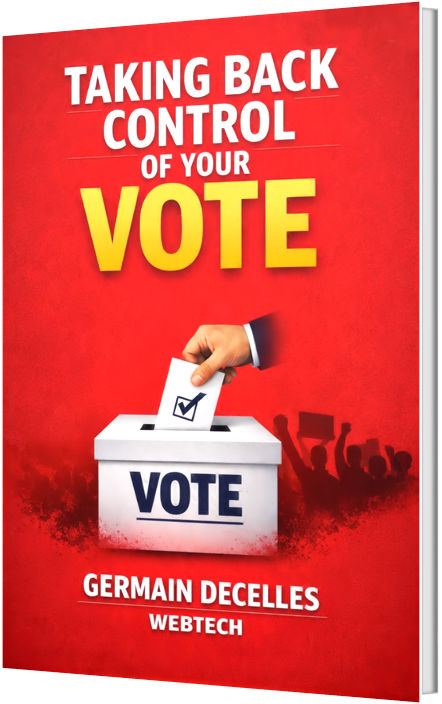
TAKING BACK
CONTROL OF YOUR VOTE |
|
See Clearly.
Choose Wisely.
|
|
Two
simple actions... yet
powerful enough to
transform your influence
as a citizen and your
leadership if you are a
candidate. |
|
Today, every vote matters
more than ever. Every
decision affects your
family, your community,
your country, and
sometimes even the world.
This is true not only for
the person casting a
ballot, but also for the
one hoping to receive it. |
|
In a world saturated with
emotions, conflicting
narratives, and invisible
forms of influence, one
question becomes
essential:
How can we
maintain clarity when
everything seems to push
us toward confusion? |
|
|
Taking Back
Control of Your
Vote
is your guide to
seeing clearly. |
|
|
|
A book that cuts
through the noise,
dismantles
conventional
thinking, exposes
the mechanisms of
influence, and
empowers every
individual,
whether citizen or
candidate, to
regain control
over their
choices,
intentions, and
impact.
|
|
No dogma. No
partisan agenda.
No political
magic. Just common
sense, clear
thinking, and an
invitation to
think for
yourself.
|
|
You will discover
how narratives
shape perceptions,
how emotions can
cloud judgment,
how collective
memory sometimes
fades by design,
how to recognize
propaganda before
it reaches you,
and how to protect
your civic power
in a world where
economics,
politics, and the
media are
reshaping
democracy.
|
|
if you are a
candidate, you
will learn what
truly influences
voters, how to
communicate with
integrity, and how
to fully embrace
the responsibility
that comes with
your role.
|
|
Some pages will
make you smile.
Others will
challenge you. But
all of them will
make you think.
|
|
Because
taking back
control of your
vote — or your
candidacy — means
taking back
control of the way
you think. And
that is a powerful
act. A free act. A
civic act.
|
|
 |
| |
|
|
|
|
TABLE OF CONTENTS |
DISCERN CLEARLY, CHOOSE
WISELY
|
CHAPTER 1 –
UNDERSTANDING
HOW THE RIGHT TO VOTE HAS EVOLVED |
|
• |
When Voting Was a Privilege |
|
• |
The Shocks of History
(Revolutions, Reforms,
Uprisings: The Slow
Conquest of Suffrage) |
|
• |
A
Living Pillar in
Transformation
(Technology, Trust,
Transparency: Contemporary
Challenges) |
|
• |
Where Do We Stand on Citizens’ Voting Rights Compared to the Vote of
Non‑Citizen Immigrants? |
|
• |
What About the Voting
Rights of Non‑Citizen
Immigrants? |
|
• |
Should political decisions
prioritize rational
analysis or emotional
resonance? |
|
• |
Where Do We Stand Today? |
|
CHAPTER 2 –
UNDERSTANDING MEMORICIDE AND
POPULICIDE |
MEMORICIDE :
The Erasure of the Soul Through
Forgetting
| •
|
Signs of a World Coming
Apart
|
| •
|
A Slow Deconstruction of
the Collective Soul
|
| •
|
A Voluntary Break with the
Past
|
| •
|
The Erasure of the Soul
Through Forgetting
|
| •
|
Peoples Orphaned by Their
Past
|
POPULICIDE :
The Erasure of the People by Its
Own Elites
| •
|
A People Reduced to
Silence
|
| •
|
The Disappearance of the
People as a Subject of
History
|
| •
|
An Erasure Without
Violence, Yet Not Without
Consequence
|
|
Memoricide often reveals
itself in seemingly
harmless gestures.
|
|
Populicide does not reveal
itself through brutal
gestures. |
|
Combating memoricide by
restoring living memory.
|
|
1. |
Restoring places of memory |
|
2. |
Relearning how to tell
stories |
|
3. |
Teaching what has been
removed |
|
4. |
Cultivating rites,
gestures, and traditions |
|
5. |
Resisting the substitution
of stories |
|
6. |
Restoring the past to its
place in the present |
|
7. |
Making memory a collective
responsibility |
|
Fighting populicide by
restoring the sovereignty
of the living people
|
|
1. |
Reviving real
participation |
|
2. |
Making transparent what
was opaque |
|
3. |
Revaluing popular speech |
|
4. |
Restoring unity without
denying diversity |
|
5. |
Resisting the substitution
of reality by narrative |
|
6. |
Rehabilitating everyday
sovereignty |
|
7. |
Making the people a
subject, not a backdrop |
|
CHAPTER 3 – VOTING: A TOOL,
NOT AN END IN ITSELF |
|
1. |
Why voting is not an
identity but an
instrument? |
|
2. |
How voting is an act of
collective projections? |
|
3. |
Why, despite its
fragilities, does voting
remain essential? |
|
4. |
What does voting truly
require from us, and what
are its limits? |
|
5. |
What remains to be done
once the election is over? |
|
|
CHAPTER 4 – YOU VOTE WITH YOUR
UNDERSTANDING OF THE WORLD |
|
Interpreting the
situation:
|
|
1. |
Are you able to reflect on
the meaning of life in
order to find your own
path? |
|
2. |
How does each person
interpret a situation
through their own personal
history? |
|
3. |
What invisible forces
influence your choice when
you vote? |
|
4. |
Why we vote out of love? |
|
5. |
Why each vote is an
intimate contribution to
the community? |
Personal consciousness
|
|
A
question of reality
|
|
How voting is perceived
across continents
|
|
Suicidal empathy and
voting
|
|
|
CHAPTER
5 –
SO MANY THINGS WE DO NOT KNOW
|
|
Understanding what
ignorance is |
|
Understanding what
knowledge is |
|
Understanding the
difference between knowing
and understanding |
|
Understanding the
difference between opinion
and knowledge |
|
Understanding what
critical thinking is |
|
Understanding what truth
is |
|
Understanding the
difference between truth
and opinion |
|
Understanding what common
sense is |
|
Ignorance and the
disappointment of the
educational system |
| •
|
LIgnorance thrives when
the school abandons its
primary mission |
| •
|
Disappointment arises from
the gap between promise
and the reality |
| •
|
Fighting ignorance: a
shared responsibility |
| •
|
The massive introduction
of « Google‑mania » and
artificial intelligence
into the educational
system |
| •
|
Rebuilding education means
rebuilding society |
How to challenge
people to discover |
|
1. |
Encouraging curiosity
through open‑ended
questions |
|
2. |
Proposing Appropriate and
Motivating Challenges |
|
3. |
Fostering autonomy in the
research process |
|
4. |
Creating an environment
that values exploration
|
|
5. |
Recognizing and valuing
progress made |
|
|
CHAPTER 6 – THE ART OF
UNDERSTANDING WHAT WE WANT TO HEAR |
|
Why cannot people
recognize a fact, a
situation, or a social or
political point of view?
|
|
Why do people keep denying
facts? |
|
What happens when apparent
« stupidity » becomes
exploitable? |
|
Why do we have higher
standards for choosing a
TV series than for
choosing an electoral
candidate? |
|
1. |
Entertainment consumption
activates our critical
thinking |
|
2. |
Political choice activates
our protection mechanisms
|
|
3. |
Politics triggers powerful
cognitive biases |
|
4. |
Entertainment demands
nothing from us. Politics
demands everything |
|
5. |
Political actors exploit
this vulnerability |
Why do we tend to
forget after 30 days — and
even more so when
it
comes to politics? |
Why do some people think «
there’s no point in voting
» — and
how to talk it
without conflict? |
How to encourage people to
participate in political
life
without
controversy or partisan
debate? |
How does the politician
use denial of truth to
claim
that «
everything is under
control »? |
|
How can we help voters
understand that their
social responsibility goes
beyond their personal
interest? |
|
Do you know the fable of
the scorpion and the frog? |
|
|
CHAPTER 7 –
UNDERSTANDING THE MECHANICS OF
POLITICAL PROPAGANDA
|
|
|
The history of political
propaganda |
|
How do people come to
accept ideas, and how is
denial of reality created?
|
|
Why the simplification
through slogans,
narratives, heroes, and
enemies? |
|
How can we identify
propaganda? |
|
Why does the psychology of
propaganda work? |
|
Why has propaganda become
more aggressive? |
|
And what can be said about
censorship and its impact
on political life? |
|
How is adhesion created?
|
|
And what can be said about
the role of emotions in
political life? |
|
Why do politicians
strategically ignore
certain things to achieve
their goals? |
|
Why do we forget so
quickly? |
|
Do our journalists and
commentators lack
historical training and
perspective? |
|
Journalist and
commentators: two distinct
roles in the media
landscape |
|
Are journalists and
commentators, the parrots
of politicians? |
|
How can we detect media
honesty? |
|
How should we interpret
political polls? |
|
Do you like to being lied
to? |
|
Do we each have our own
reality? |
|
And what should we say
about the cultural
industry and its role in
political propaganda? |
|
Is subsidized culture
independent in its
thinking, or subject to
the system? |
|
Is modern culture build on
negativity? |
|
And what should we say
about the « woke » society
and its effect on society
as a whole? |
|
Are you on the wrong side
of normality? |
|
What is artificial
intelligence? |
|
AI as a new actor in
propaganda |
|
How should we should use
AI? |
|
The impact of AI: will
intellectual autonomy
endure? |
|
How can we understand this
refusal to see? |
Does developing critical
thinking help against
political propaganda?
|
|
|
CHAPTER 8 –
A
QUESTION OF RESPONSIBILITY |
|
The Orwellian universe : |
|
What are the
responsibilities of
citizens? |
|
What are the
responsibilities of
parents? |
|
Parental responsibility in
relation to society? |
|
What are the
responsibilities of the
educational system? |
|
Society’s responsibility
in preventing the
indoctrination of
children? |
|
The responsibilities of
migrants in integrating
into their new host
society? |
|
The responsibilities of
the host country toward
the migrants in their
integration into their new
host society? |
|
What are the
responsibilities of the
politician? |
|
What are the
responsibilities of a
government? |
|
What are the
responsibilities of civil
servants? |
|
What are the
responsibilities of
judges? |
|
The responsibility of
society regarding the
acceptance of religious
courts? |
|
What are the
responsibilities of police
officers? |
|
What are the
responsibilities of
military personnel? |
|
What are the
responsibilities of the
clergy? |
|
How to distinguish good
from evil? |
|
Why do people lack the
courage to enforce what
must be respected? |
|
How to make people
responsible when faced
with society’s problems?
|
|
How to make people
responsible when faced
with cultural
confrontations? |
|
What does « excessive
cultural accommodations »
means? |
|
How to assess excess in a
context of suicidal
empathy? |
|
How to restore trust in
the face of discourses on
excessive cultural
accommodations? |
|
How to restore trust among
people exposed to
discourses that push them
to hate their own country? |
|
1. |
Restoring a clear
vision of reality
|
|
2. |
Restoring meaning
to belonging |
|
3. |
Countering
discourses that
fuel hatred |
|
4. |
Restoring
collective memory
|
|
5. |
Encouraging the
courage to think
for oneself |
|
6. |
Reminding people
that society is a
collective work |
|
| |
|
Why do some people let
themselves be easily
influenced by a narrative
to the point of losing
nuance? |
How can we make people
responsible when they have
developed an ideological
conditioning syndrome,
such as TDS?
|
|
CHAPTER 9 – WHEN THE
ECONOMY STEERS DEMOCRACY |
|
What are the main types of
economies recognized by
economists? |
|
What are the systems or
ideologies? |
|
What abuses against human
beings have been
committed, throughout
history, under the systems
of capitalism, socialism,
communism, fascism, and
Nazism? |
|
An international
perspective inspired by
the critique of American
Mark Levin |
|
How does the economy
become a tool of power
capable of shaping
behavior, crafting
narratives, and
influencing democracy?
|
|
How does the economic
psychology of the modern
citizen shape their
judgments, fears, hopes,
and ultimately their
democratic choices? |
|
How do economic fears
transform societies,
orient ideological
narratives, and influence
democratic choices? |
|
What is the ideology of «
wokeism » is regarding the
economy? |
|
What are the differences
are between DEI and MEI? |
|
How DEI and MEI redefine
our conception of economic
justice, balancing
acknowledged identity and
proven merit? |
|
The « Islamist woke
movement »: genuine
alliance or polemical
mirage in economics and
social affairs? |
|
Does Elon Musk’s purchase
of X stages a strategic
use of the economy to
support democracy? |
|
What does Elon Musk say
about freedom of opinion
on the X platform? |
|
How do digital platforms,
by converting attention
into value, shape
citizens’ behaviors,
anger, and convictions?
|
|
How does the economy
becomes a theater where
our individual
responsibilities, our
collective narratives, and
the powers that shape
democracy are revealed? |
|
|
CHAPTER 10 – THE
LABYRINTH OF LOCAL, NATIONAL, AND
INTERNATIONAL POLITICS |
THE LOCAL
LABYRINTH: POLITICS OF THE
EVERYDAY
| • |
Immediate concerns: the
beating heart of local
politics |
| • |
Culture in decline: when
shared reference points
begin to crack |
| • |
Suicidal empathy: when
compassion becomes
surrender |
| • |
Lack of social
coordination: when the
nation moves forward in
spare parts |
| • |
Proximity patriotism:
loyalty to the places that
shaped us |
| • |
Local politics as a human
space: emotions,
relationships, solidarity,
visible tensions |
THE NATIONAL LABYRINTH:
POLITICS AS THE MIRROR OF THE
NATION
|
A. |
The
counter-revolution,
according to Victor David
Hanson: |
|
• |
The
diagnosis — a cultural
revolution that has become
a system |
|
• |
The
historical explanation —
the passivity of the
elites in the face of the
metamorphosis |
|
• |
The
moral justification —
restoring what allows a
civilization to stand
upright. |
|
• |
The
moral justification —
normality as a common
good: |
|
• |
How
to use Hanson in an
international context:
|
|
• |
Local politics as a human
space: emotions,
relationships, solidarity,
and visible tensions. |
|
1. |
Observe institutions as
landscapes in
transformation: |
|
2. |
Identify shifts rather
than ruptures: |
|
3. |
Examine the passivity of
local elites: |
|
4. |
Question the moral
foundations of society: |
|
5. |
Use
Hanson as a mirror, not as
a model: |
B. |
The national level is the
beating heart of the
political labyrinth: |
|
• |
Identity narratives: what
the country believes it
is, what it wants to
become |
|
• |
A
weakened national culture:
when symbolic foundations
begin to crack |
|
• |
Large scale suicidal
empathy: when compassion
leads a nation astray |
|
• |
Patriotism as a
stabilizing force: love of
country as a collective
anchor |
|
• |
The
wisdom required of
politicians: deciding
despite pressure,
resisting collective
emotions, protecting the
nation rather than
flattering the crowds |
|
• |
The
lack of social
coordination: when the
nation fragments into
archipelagos |
|
• |
Structural tensions: the
deep fault lines running
through the nation |
|
• |
The
nation as a symbolic
space: fractures, hopes,
anger, aspirations |
THE INTERNATIONAL LABYRINTH:
POLITICS AS A NETWORK OF FORCES
| • |
Shifting alliances:
diplomacy, geopolitical
blocs, international
organizations |
| • |
A
global culture in
transformation: clash of
values, competition
between narratives, loss
of universal reference
points |
| • |
Suicidal empathy in
international relations:
strategic naïveté,
dangerous concessions,
confusion between peace
and weakness |
| • |
Patriotism as an anchor:
nations seeking to
preserve their sovereignty
in an unstable world |
| • |
The wisdom of leaders:
navigating a maze of
pressures, anticipating
crises, protecting
national interests |
| • |
The lack of global
coordination: paralyzed
international
institutions, fragmented
responses to global crises
|
| • |
Global tensions:
conflicts, migrations,
worldwide economic crises |
| • |
The world as an unstable
maze: every gesture of a
nation resonates elsewhere |
THE INTERACTIONS BETWEEN THE
THREE LEVELS
|
|
CHAPTER 11 –
THE
ART OF JUDGING A CANDIDATE |
|
Choosing with informed
judgment |
|
The Rigor of the Gaze:
Hiring or Electing, the
Same Demand |
|
Judging a candidate
requires vigilance,
responsibility, and
courage? |
|
What About the Psychic
Vampirism of Voters and
Candidates? |
|
How Can One Recognize a
Dangerous Politician? |
|
Does Memory Extend Beyond
Three Months? |
|
Does Political History
Seem to Repeat Itself? |
|
Do the Seven Deadly Sins
Help Us Discern
Candidates? |
|
Do You Like TO BEING Lied
to in Politics? |
|
Do You Strategically
Ignore a Politician, Even
If You Do Not Morally
Accept Them? |
|
Are You a Political
Follower—A Sheep Who
Simply Goes Along? |
|
Are You Capable of Facing
the Truth? |
|
Will the Work Take Longer
Than Expected? |
|
|
CHAPTER
12 –
THE ART OF INFLUENCING THE VOTE |
|
The Art of Becoming
Unavoidable |
|
• |
Political
Promotion: |
|
• |
Political
Advertising: |
|
• |
The Role of the
Media: |
|
• |
Social Media: |
|
• |
Political
Storytelling: |
|
• |
The Psychology of
the Voter: |
|
How to Decode a
Politician’s Strategic
Game? |
|
EPILOGUE — THE FUTURE OF VOTING |
| The defenders of the vote |
| The great forces that will
shape this future |
| • |
Electoral Propaganda:
Light or Vertigo |
| • |
Limiting Electoral
Fraud: Trust or Suspicion |
| • |
Foreign Interference:
Vigilance or Paranoia |
| • |
The Security
Surrounding the Ballot: Protection or Rigidity |
| • |
Election-Day
Protection: Peace or Tension |
| • |
The Use of Technology
in the Vote-Counting Process: Speed or
Vulnerability |
| • |
The Involvement of the
Press in Delivering Results: Information or
Haste |
|
The vote of tomorrow will not be just an act: it will be
a landscape. |
| • |
Digital Voting: The
Hand That Becomes Light |
| • |
Emotional Voting:
Politics That Touches the Heart |
| • |
Algorithmic Voting: The
Will Filtered Through Machines |
| • |
Identity Voting:
Politics as a Mirror |
| • |
Voting as Resistance:
The Gesture That Refuses Erasure |
Are we still the
masters of the world we have built since the
stone age? |
| Defend, reinvent, and
understand in order to protect the act of
freedom that is the vote |
|
|
|
|
ABOUT THE AUTHOR |
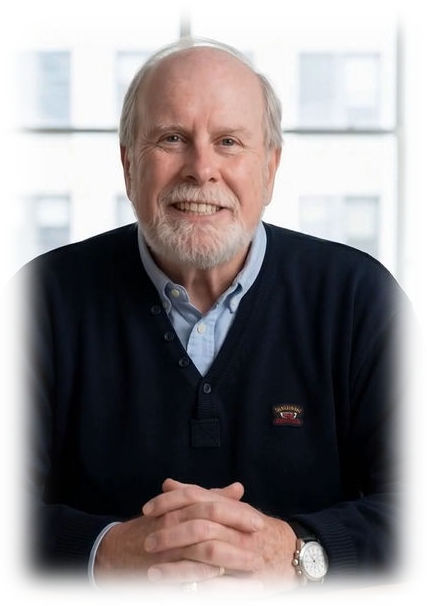
In addition to his
writing activity,
Germain Decelles
plays a role as a
strategist and
facilitator in
change management.
Each year,
he offers several
seminars and
training sessions
on change
management,
transformation,
and business
innovation. In
addition, he is
the president of
WebTech Management
and Publishing
Incorporated.
With over 40
years of
experience in
business and
consulting on
local and
international
markets, Germain
Decelles has
worked in various
sectors such as
retail,
distribution,
information and
communication
technologies,
transportation,
manufacturing,
financial
services, and
government
organizations.
He has
received training
from prestigious
institutions such
as the Ford Motors
Management
Institute, the
Chrysler Leasing
Institute, the
International
Forecasting
Institute, McGill
University, the
Kappa Institute,
and the Digital
Equipment Computer
Institute. He
holds a master's
degree in business
administration
from Concordia
College &
University and a
certificate in
business
management and
organization from
Hautes Études
commerciales de
Montréal. |
|
 |
| |
Germain Decelles,
o.s.j., MBA
|
|
|
A retired
member of the Canadian Coast Guard
(S.A.C.S.M.), Germain Decelles
serves as the secretary of the
General Assembly and as an
international advisor. In 1990, he
received the Admiralty Service
Award for promoting the service
internationally. He is also a
member of the Sovereign Order of
Saint John of Jerusalem.
|
|
Germain
Decelles and his family reside in
Montreal, Quebec, Canada. |
|
You can contact him at the
following address :
gdecelles@webtechmanagement.com |
|
|
|
|
|
|
|
|
|













